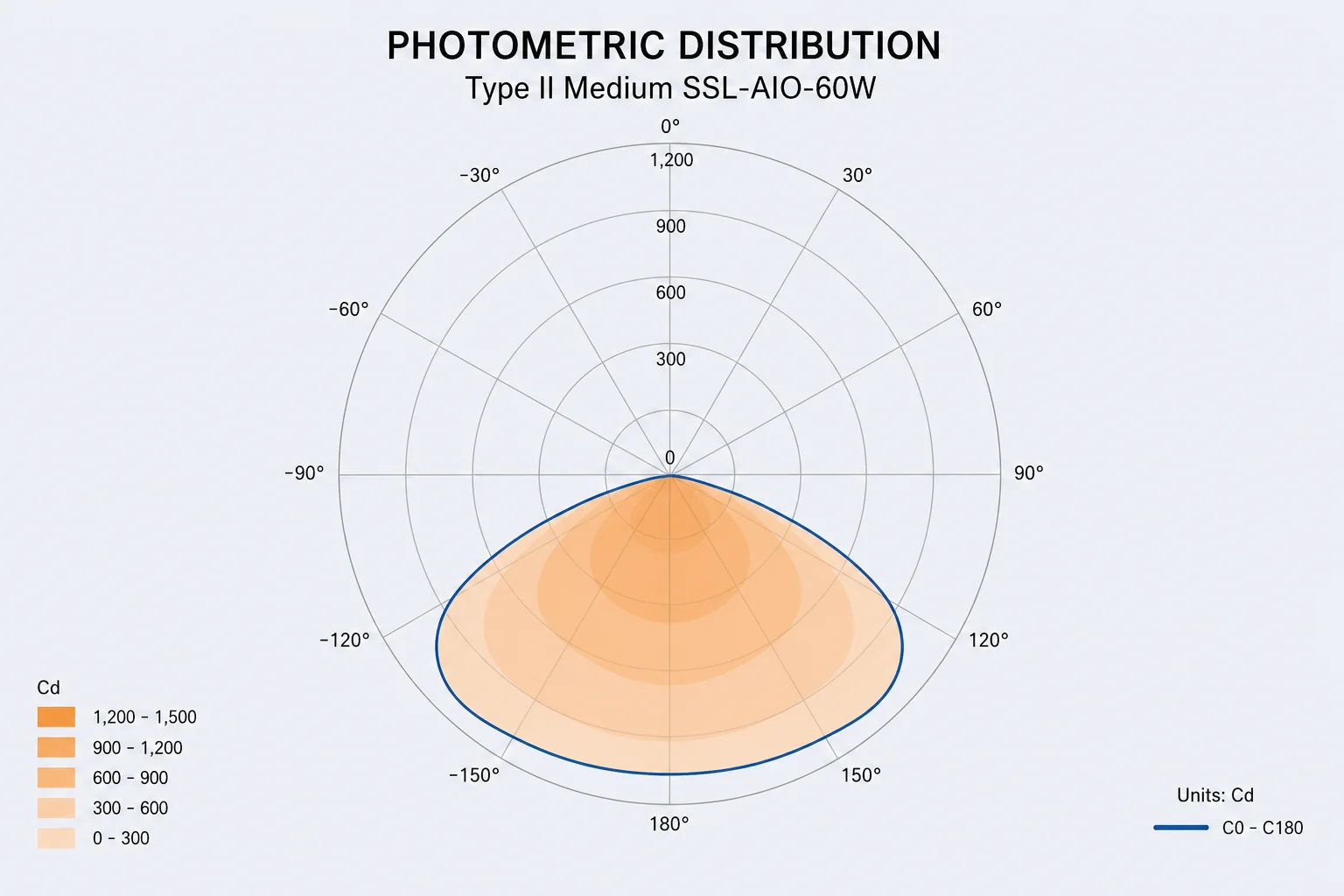

In solar street light tenders, mismatched optic type and road function is a frequent disqualifier. Below is a practical guide to Type II, Type III and Type Below distributions and how to align them with IES files and DIALux output.
Quick reference
- Type II (medium throw): Two-way lanes and campus loops, 8–10 m poles, covers dual lanes
- Type III (wide): Larger intersections, parking entries or feeders needing wide uniformity
- Type Below (narrow / walkway): Sidewalks, cycle paths and trails — light on footfall, less spill to carriageways
- Medium / Very Short: Low poles (≤6 m) or wall mount — common on compact integrated heads
Match pole height and spacing
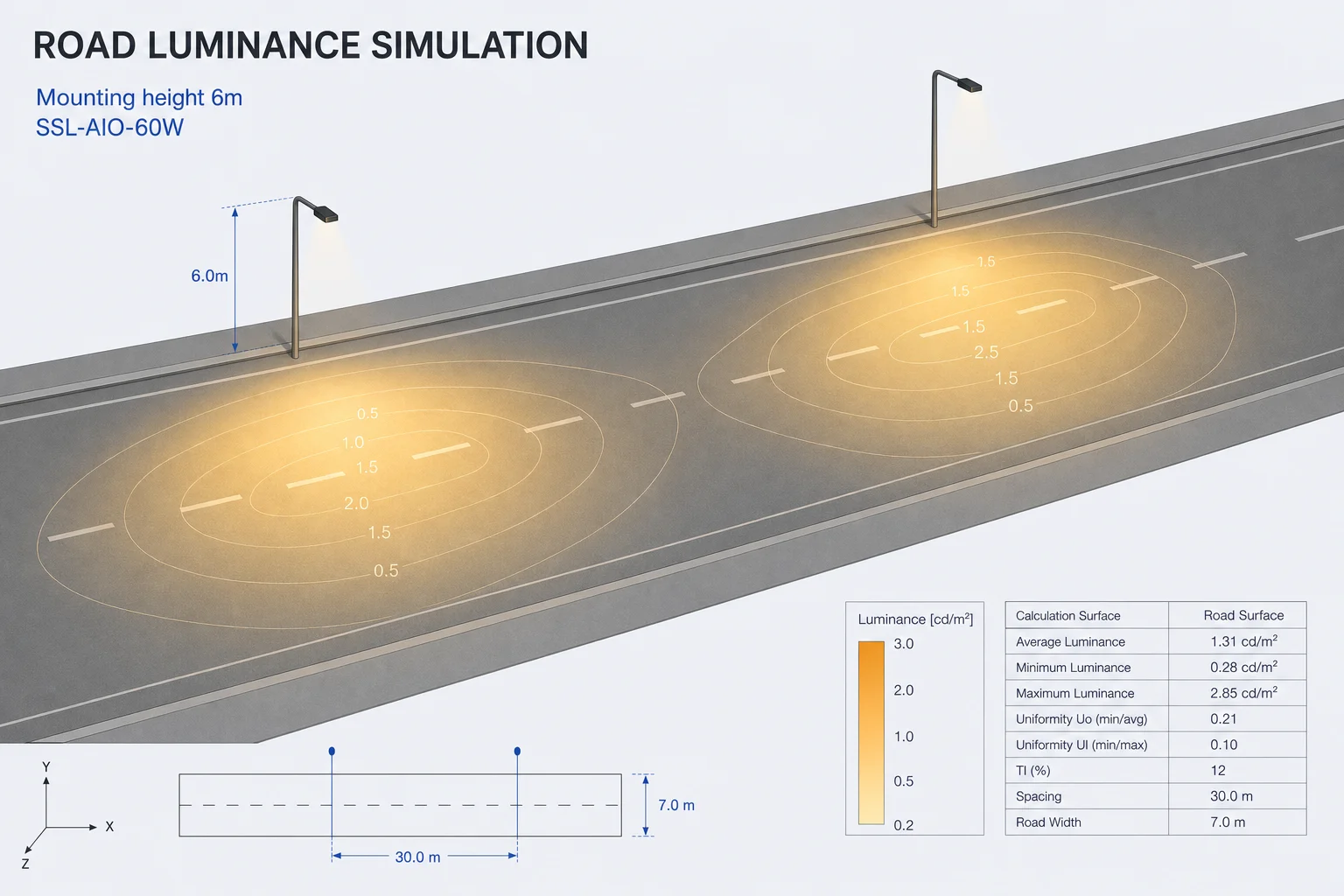
Optic type sets lateral coverage; pole height and spacing set longitudinal overlap. Raising poles without adjusting spacing lowers uniformity; narrow optics on tall poles need tighter spacing. Before bidding, list road width, design speed (if any), pole height, spacing and target average illuminance — then confirm lumen band and optic type with the manufacturer.
Glare and uplight
Campus and municipal owners increasingly review threshold increment (TI) and uplight. BUG ratings, peak candela angle and shielding should be checked in DIALux glare views. Integrated heads are compact — prefer well-shielded lens optics instead of chasing lumens alone.
Our Shenzhen factory publishes IES/LDT and recommended height/spacing tables per wattage band; custom distributions (e.g. stronger Type Below) can be evaluated where MOQ allows.