
Product technology

How to read IES / LDT photometric files for solar street lights

Jun 2026 Shenzhen engineering team 1 min read
Back to Media Center

Overseas municipal and campus tenders increasingly require IES or LDT photometric files verified in DIALux or AGi32. This note explains the key fields in solar street light photometrics so you can confirm a model matches the road class before bidding.

IES vs LDT

  • IES: Common in North America and many export packs — ASCII text with luminaire lumens, candela table and electrical data
  • LDT: Preferred in parts of Europe (EULUMDAT) — same intensity distribution, different file layout
  • Both import into DIALux evo; submit the format specified in the owner template

Five checks when reviewing a file

  1. Rated lumens (lm): Must match the datasheet; note whether driver losses are included
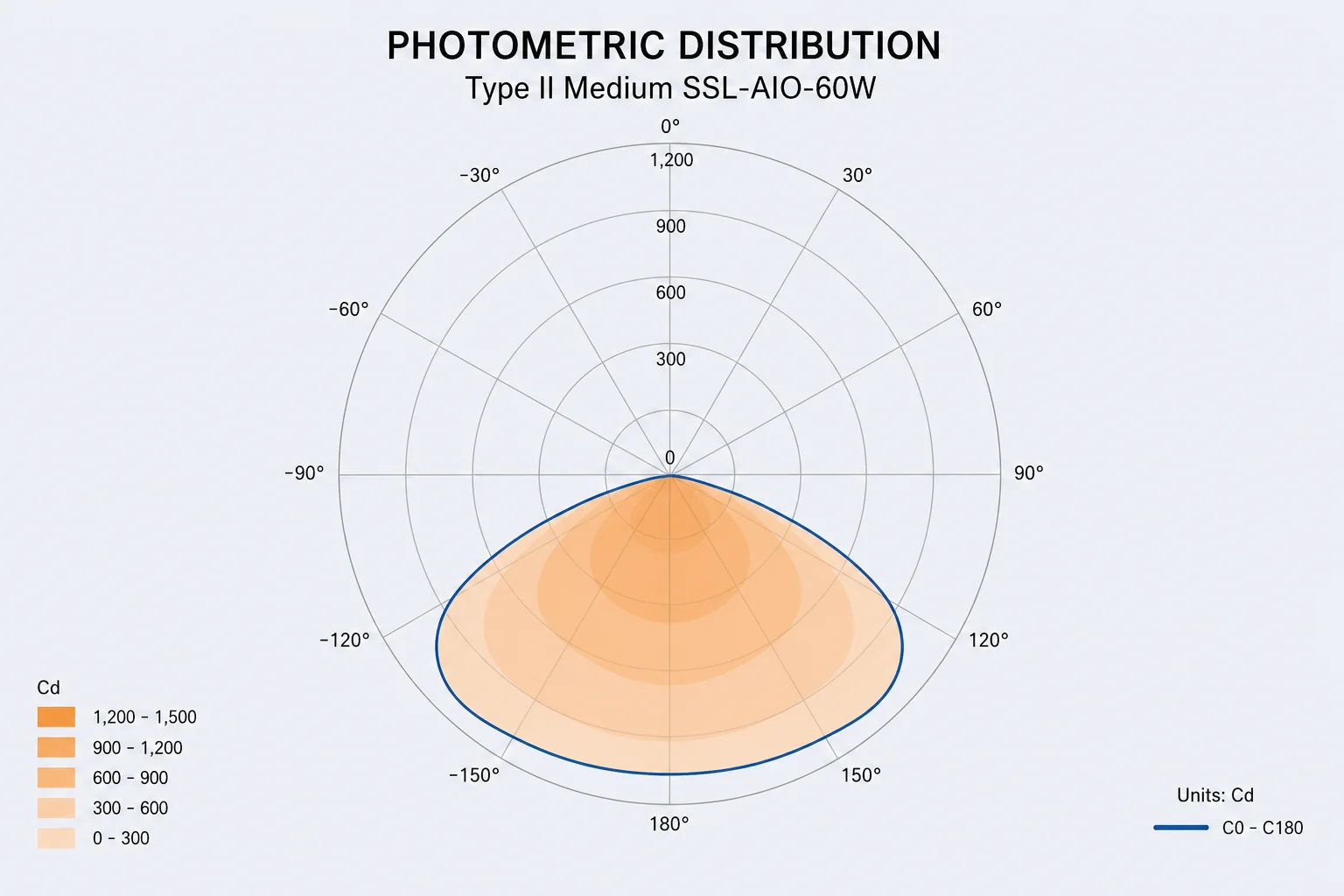
  2. Intensity distribution: Type II / III / Below etc. — defines lit width and back spill
  3. Peak candela angle: Drives far-field illuminance and glare control
  4. BUG rating (Backlight / Uplight / Glare): Required by some North American owners
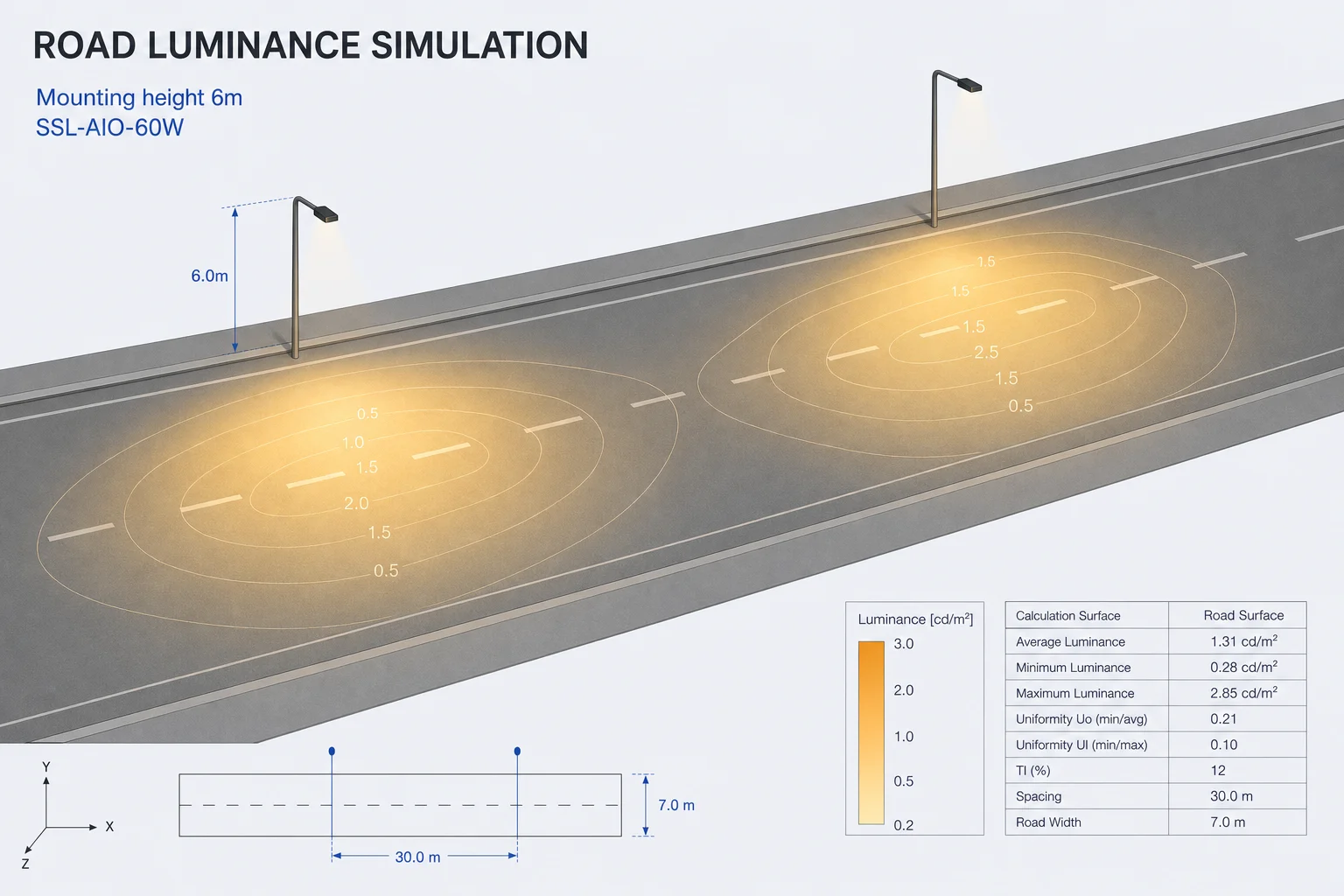
  5. Maintenance and conditions: DIALux inputs (pole height, spacing, road reflectance) must match the RFP

Link to solar street light selection

Correct optics with insufficient wattage still fails autonomy targets; overly wide distributions waste brightness and battery capacity. Review system wattage, optic type, pole layout (height × spacing) and rainy-day autonomy together. Our Shenzhen factory supplies IES/LDT plus DIALux layout captures per model for tender volumes.

"Run the owner pole spacing in DIALux as soon as you receive the IES — it prevents field illuminance disputes better than lumens on a datasheet alone."

— Optics engineer, Shenzhen factory

Related articles

Explore more news and insights from our team

Product technology

How to read IES / LDT photometric files for solar street lights

Jun 2026 Shenzhen engineering team 1 min read
How to read IES / LDT photometric files for solar street lights

Overseas municipal and campus tenders increasingly require IES or LDT photometric files verified in DIALux or AGi32. This note explains the key fields in solar street light photometrics so you can confirm a model matches the road class before bidding.

IES vs LDT

  • IES: Common in North America and many export packs — ASCII text with luminaire lumens, candela table and electrical data
  • LDT: Preferred in parts of Europe (EULUMDAT) — same intensity distribution, different file layout
  • Both import into DIALux evo; submit the format specified in the owner template

Five checks when reviewing a file

  1. Rated lumens (lm): Must match the datasheet; note whether driver losses are included
  2. Intensity distribution: Type II / III / Below etc. — defines lit width and back spill
  3. Peak candela angle: Drives far-field illuminance and glare control
  4. BUG rating (Backlight / Uplight / Glare): Required by some North American owners
  5. Maintenance and conditions: DIALux inputs (pole height, spacing, road reflectance) must match the RFP

Link to solar street light selection

Correct optics with insufficient wattage still fails autonomy targets; overly wide distributions waste brightness and battery capacity. Review system wattage, optic type, pole layout (height × spacing) and rainy-day autonomy together. Our Shenzhen factory supplies IES/LDT plus DIALux layout captures per model for tender volumes.

"Run the owner pole spacing in DIALux as soon as you receive the IES — it prevents field illuminance disputes better than lumens on a datasheet alone."

— Optics engineer, Shenzhen factory
Need a solar street light solution?

Contact our engineers for quotations, IES files and technical consultation.

Explore more news and insights from our team