
Product technology

DIALux road lighting simulation for solar street lights

May 2026 Shenzhen engineering team 1 min read
Back to Media Center

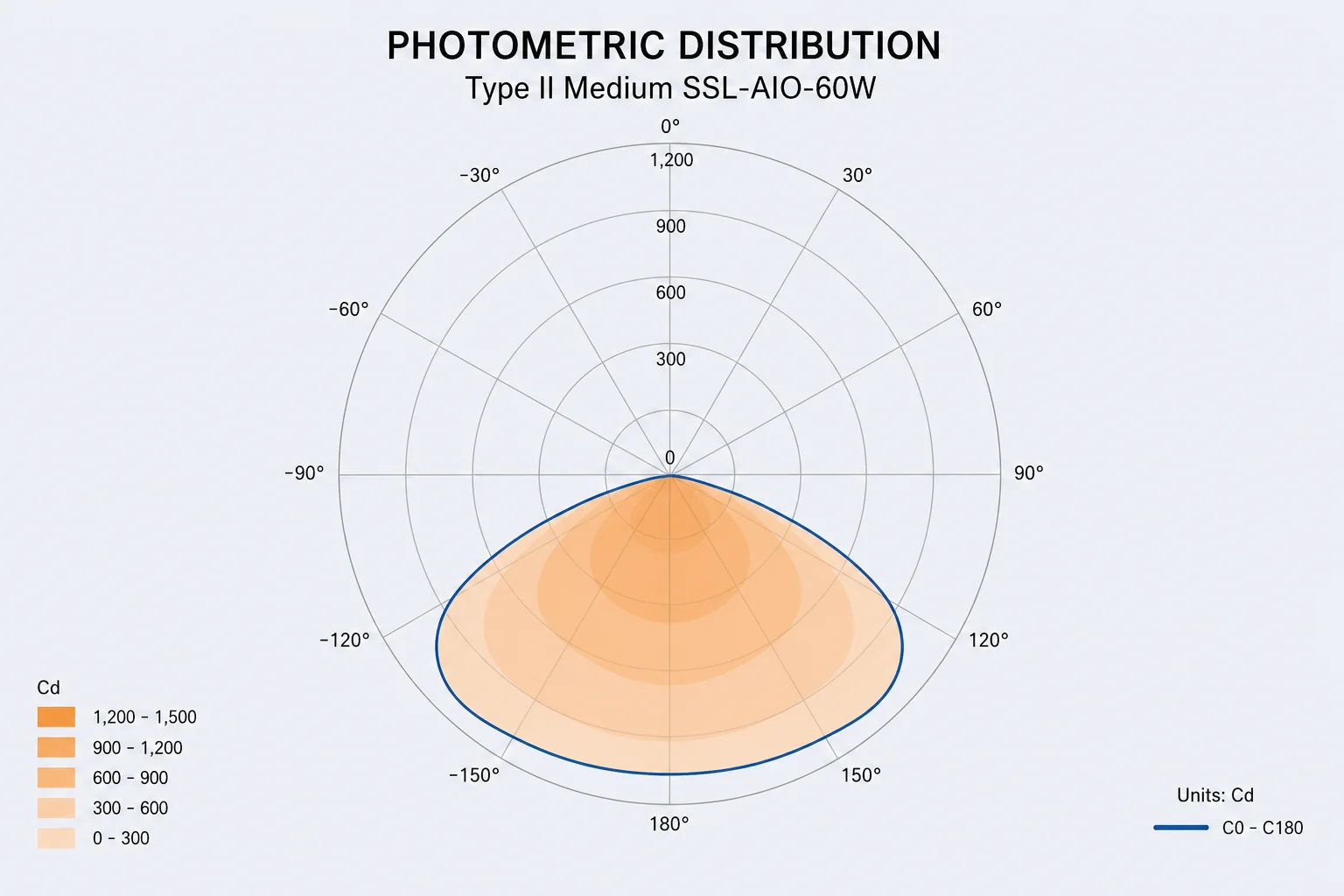
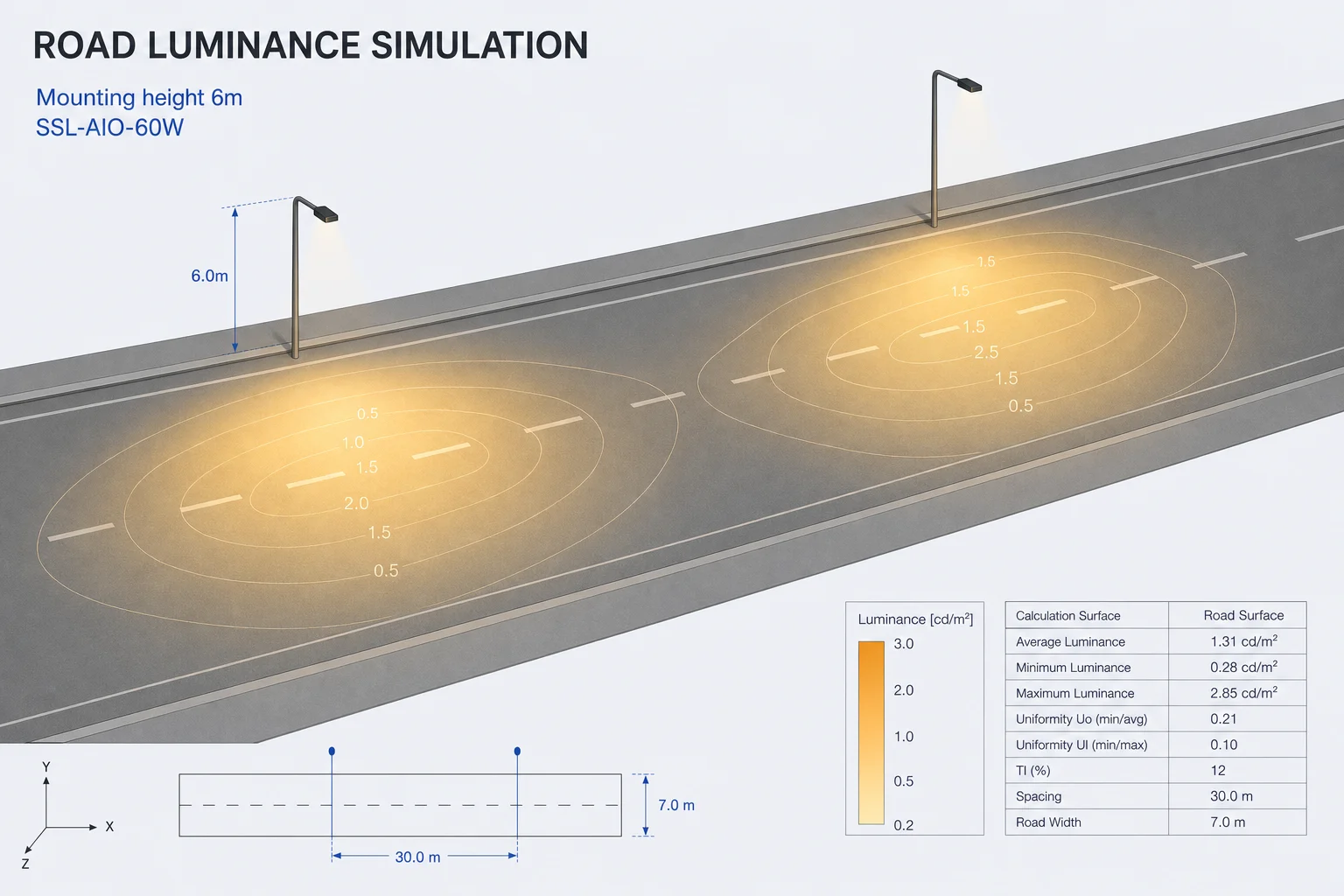
Many EPC partners reproduce owner road sections in DIALux evo to verify average illuminance, uniformity and glare before bidding. The workflow below reflects common campus feeder and municipal collector requirements.

Before you model

  • Request the exact IES / LDT file for the quoted model — do not substitute generic luminaires
  • Confirm road class: vehicular lane, walkway or mixed — each has different targets
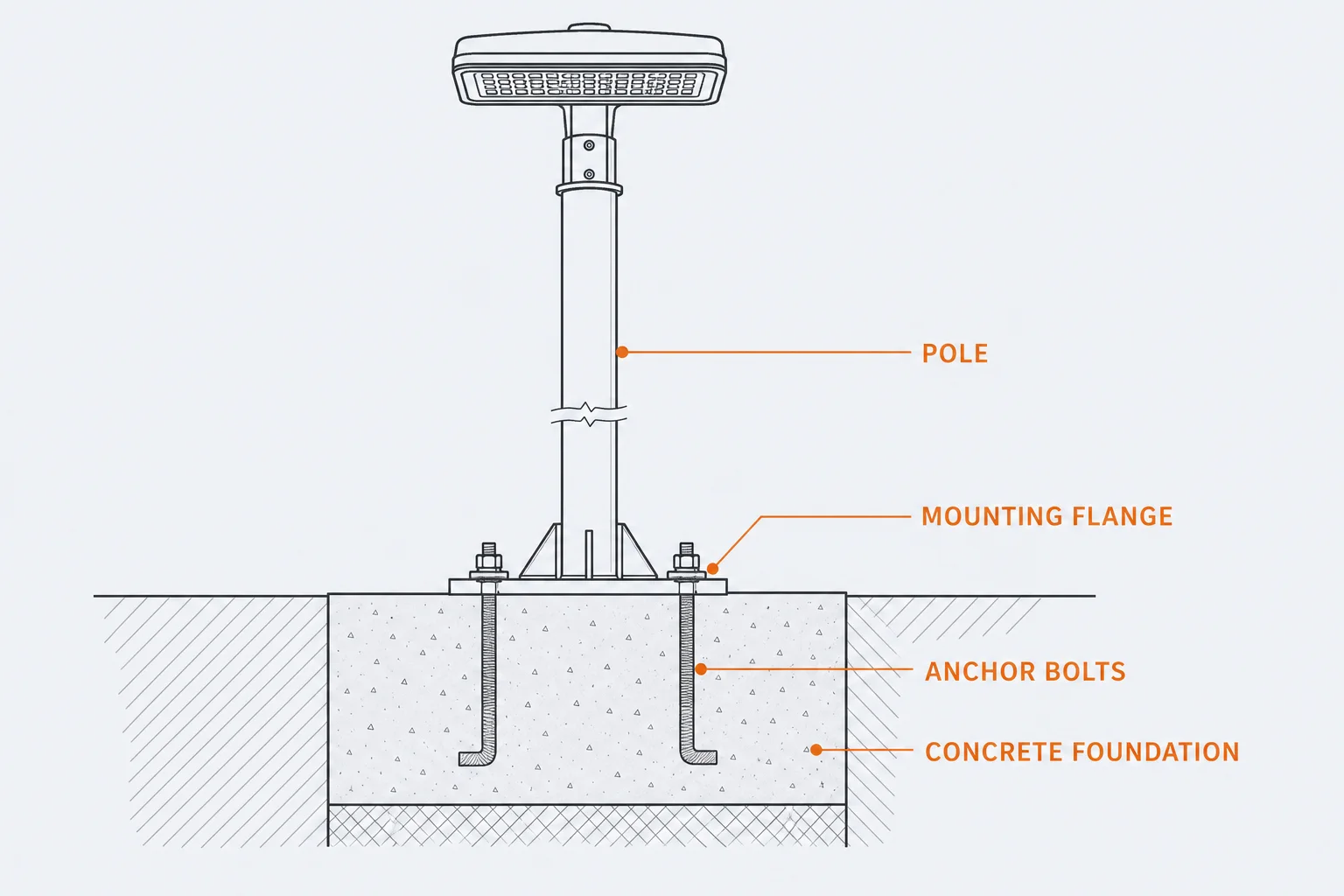
  • Record pole height, outreach, tilt and spacing; solar street lights typically use 6–10 m poles

Key DIALux settings

  1. Road surface and reflectance: Asphalt R3, concrete R2, etc.
  2. Luminaire import: Verify lumens and distribution type (Type II is common on two-way lanes)
  3. Layout: Single-sided, staggered or opposite; excessive spacing hurts uniformity
  4. Calculation plane: Often 1.5 m above lane center; some RFPs specify driver eye level
  5. Exports: Pseudo-colour illuminance, iso-lux curves, UGR/glare views per owner template

Solar-specific note

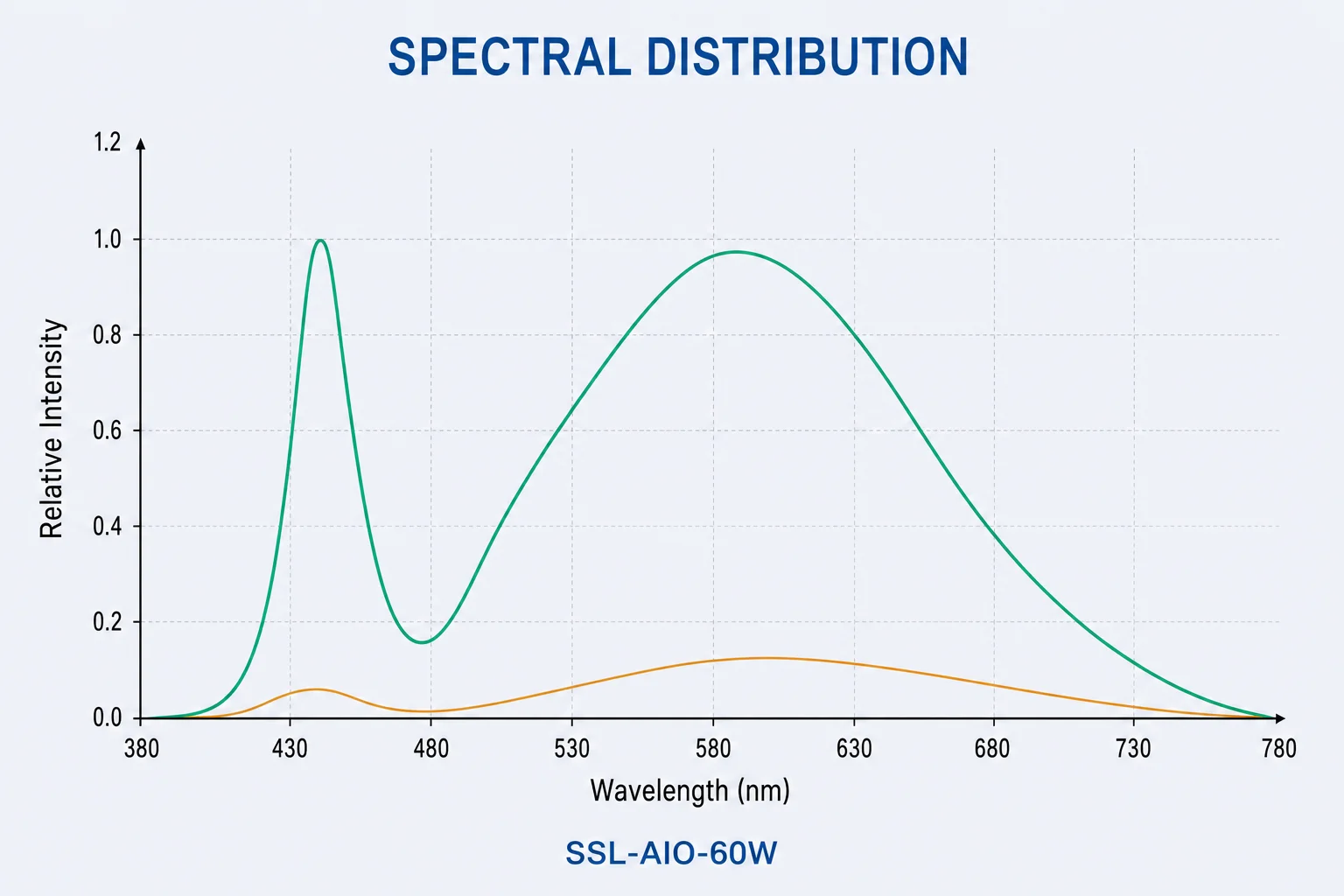
Optical simulation validates luminous output only — battery sizing and rainy-season autonomy are separate calculations. If DIALux demands higher illuminance, do not raise lumens alone; review system wattage, dimming schedules or split battery scaling. Our Shenzhen factory provides reference DIALux captures at standard spacings and can optimise layouts per project.

Related articles

Explore more news and insights from our team

Product technology

DIALux road lighting simulation for solar street lights

May 2026 Shenzhen engineering team 1 min read
DIALux road lighting simulation for solar street lights

Many EPC partners reproduce owner road sections in DIALux evo to verify average illuminance, uniformity and glare before bidding. The workflow below reflects common campus feeder and municipal collector requirements.

Before you model

  • Request the exact IES / LDT file for the quoted model — do not substitute generic luminaires
  • Confirm road class: vehicular lane, walkway or mixed — each has different targets
  • Record pole height, outreach, tilt and spacing; solar street lights typically use 6–10 m poles

Key DIALux settings

  1. Road surface and reflectance: Asphalt R3, concrete R2, etc.
  2. Luminaire import: Verify lumens and distribution type (Type II is common on two-way lanes)
  3. Layout: Single-sided, staggered or opposite; excessive spacing hurts uniformity
  4. Calculation plane: Often 1.5 m above lane center; some RFPs specify driver eye level
  5. Exports: Pseudo-colour illuminance, iso-lux curves, UGR/glare views per owner template

Solar-specific note

Optical simulation validates luminous output only — battery sizing and rainy-season autonomy are separate calculations. If DIALux demands higher illuminance, do not raise lumens alone; review system wattage, dimming schedules or split battery scaling. Our Shenzhen factory provides reference DIALux captures at standard spacings and can optimise layouts per project.
Need a solar street light solution?

Contact our engineers for quotations, IES files and technical consultation.

Explore more news and insights from our team